From scattered notes
to one clear case.
Helping a surgeon see the full picture with an AI consultation workflow.
Explore the project- Client
- A consulting surgeon
- Product
- Precedent
- Our role
- Workflow strategy · AI engineering · Product design · Deployment
01 / THE CHALLENGE
The call arrives.
The full picture does not.
Clinical notes, a radiology report, and questions from the referring team can arrive in separate exchanges. The surgeon must reconstruct the case before reviewing its urgency, sometimes in the middle of the night.
The surgeon described repeated questions, interrupted attention, and visits for cases he later considered less urgent. We focused on the work behind the interruption: collecting and organizing the information needed for a decision.
Separate accounts.
Repeated questions.
Interrupted attention.
Bring the evidence together.
Make uncertainty visible.
Support clinician review.
02 / THE SOLUTION
Expert knowledge,
built into the workflow.
We translated the surgeon's documents and feedback into 21 finding checks, defined rules, and a reviewable draft consultation priority.
- 01
Submit
Clinical notes and radiology-report text enter the case through the messaging workflow.
- 02
Organize
AI extracts the configured findings. The original account stays intact, and unclear information stays visible.
- 03
Recommend
Application code applies the checklist rules and calculates a draft consultation priority.
- 04
Review
The clinician inspects the evidence and result, gives feedback, and retains responsibility for care decisions.
AI extracts the information. Defined rules calculate the score. A clinician makes the care decision.
03 / THE PRODUCT
Show the evidence.
Make the result reviewable.
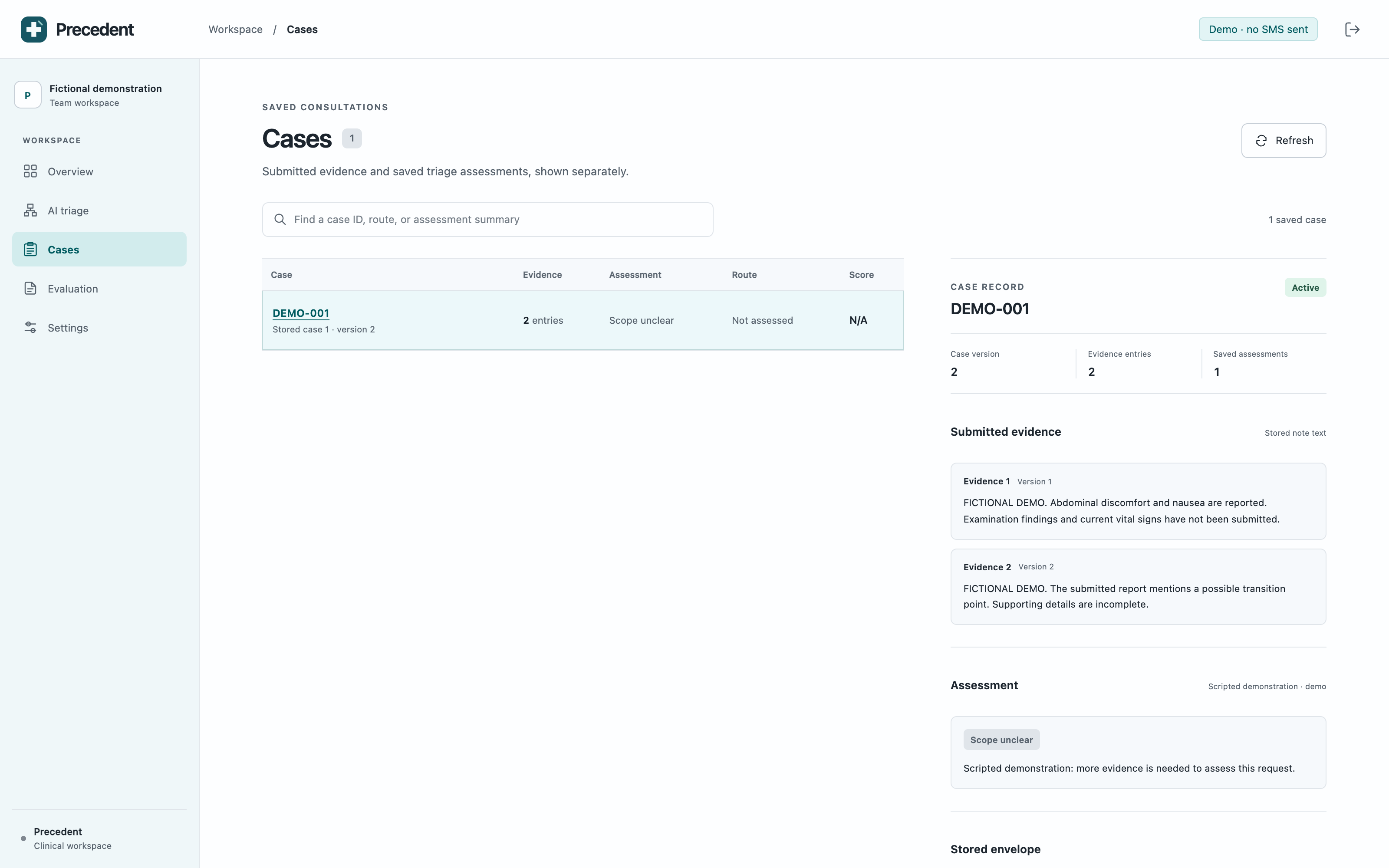
Precedent gives the team a shared place to inspect saved cases, understand assessments, and review AI results.
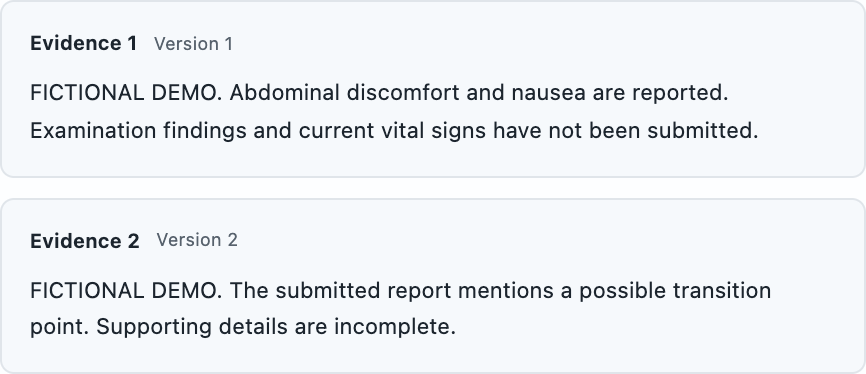
The original account
stays in view.
Clinical notes and report text remain separate from the AI assessment. Missing details are visible where the reviewer needs them.
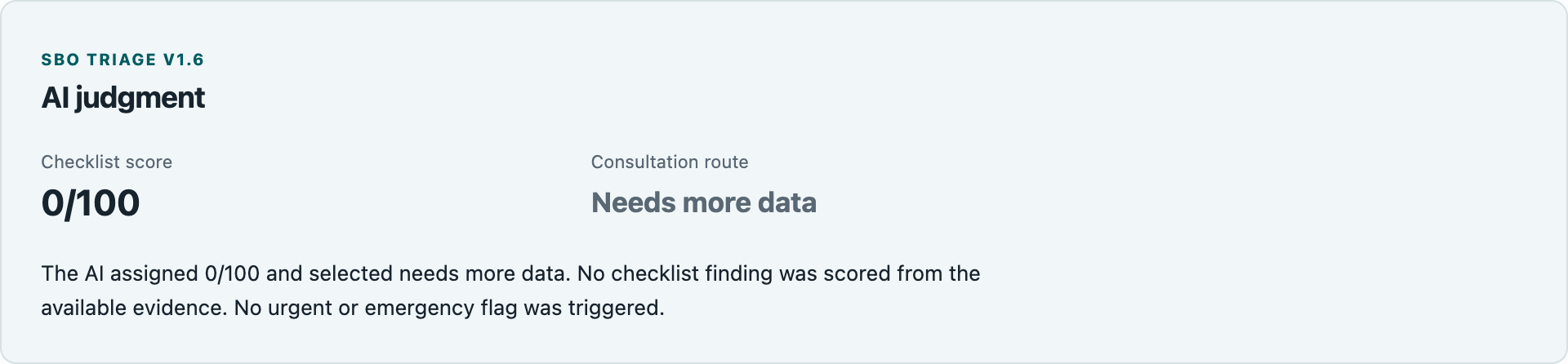
Uncertainty has
a place in the result.
The interface separates the checklist score, draft priority, and unresolved information. A score is not a probability or permission to defer care.
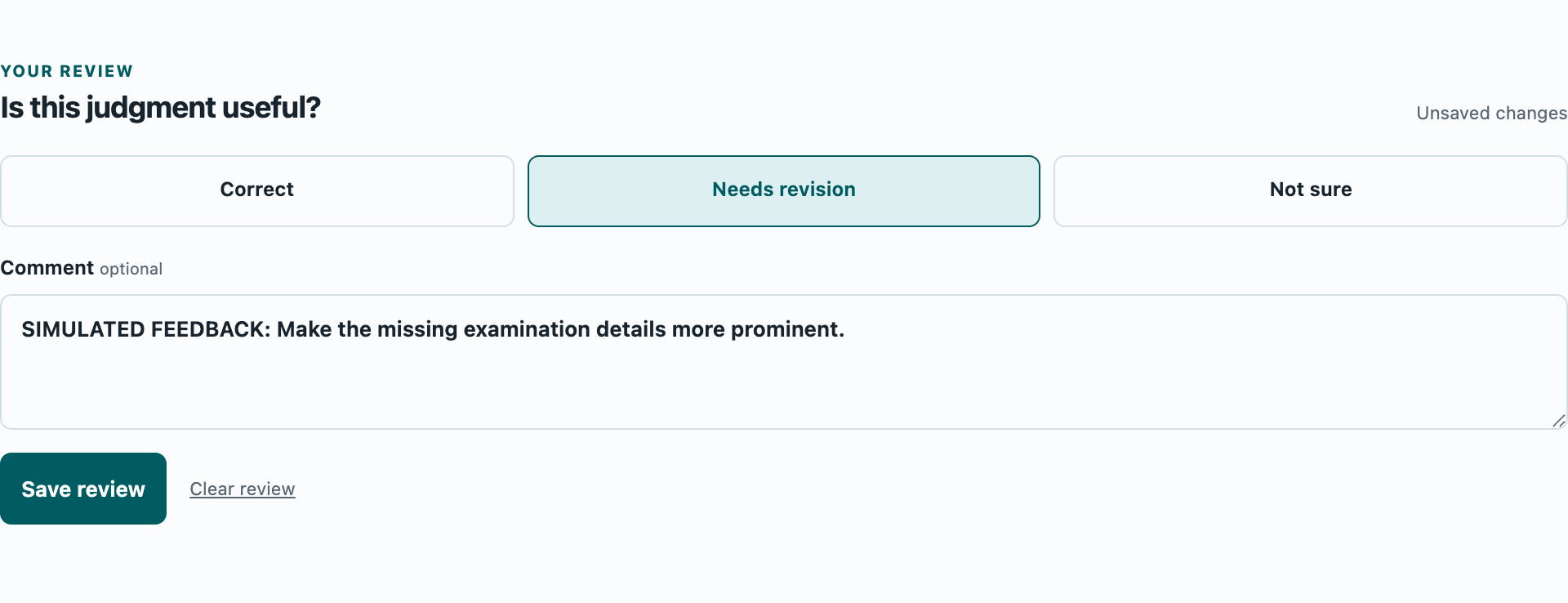
Review. Refine. Test again.
Correct, Needs revision, or Not sure. Each review stays linked to the AI version that produced the result. The team uses feedback to guide and test the next revision.
04 / THE RESULTS
More time for the work
that needs a surgeon.
250 hours saved.
Per surgeon. Per year.
Annual estimate: 1 client-reported hour per day × 250 assumed working days.
- Reduction in clarification calls
- 10%
- Reduction in case-review time
- 90%
- Surgeon satisfaction
- 5/ 5
Client-reported results.
THE DEVELOPMENT EVIDENCE
A workflow built
to be tested.
The project pairs a working product with a recorded development experiment. These results describe finding extraction, not patient outcomes.
- 21configured finding checks
- Clinical and radiology-report information, organized through defined questions and rules.
- 130distinct public text cases
- A documented collection used to exercise the finding-extraction step.
- 780/780responses passed format validation
- Two prompt designs, three runs per case. No retries or repaired outputs.
Recorded development experiment, September 2026. Format validation does not measure clinical accuracy.
How to read these results
The client reports saving one hour per surgeon per day. The project records do not include an independent time study, study method, or number of participating surgeons.
An illustrative annual estimate is 1 × 250 = 250 hours per surgeon per year, using 250 assumed working days. It is not a measured annual saving or this surgeon's verified schedule.
The experiment used 130 public text cases × 2 prompts × 3 runs = 780 responses. Repeated runs are not independent patients. For the selected prompt, positive-finding lists were stable in 128 of 130 cases; all present, absent, and unclear choices were stable in 108 of 130.
The experiment used a frozen prompt. Later prompt revisions do not inherit its results. The prototype supports clinician review; clinical validation and hospital integration remain separate work.
05 / OUR CONTRIBUTION
From a working problem
to working software.
The engagement connected process design, AI engineering, and a usable product, with the tools to test and operate it.
- Make the expertise explicit
- Translate specialist documents and feedback into extraction questions, definitions, and testable rules.
- Connect the workflow
- Bring messaging, original source records, AI extraction, and case review into one process.
- Support continued operation
- Build output validation, controlled releases, rollback procedures, health checks, and service monitoring.
Precedent is a research prototype for de-identified text. Hospital integration and clinical evaluation require separate scope and approval. Image-model research is a separate pipeline.